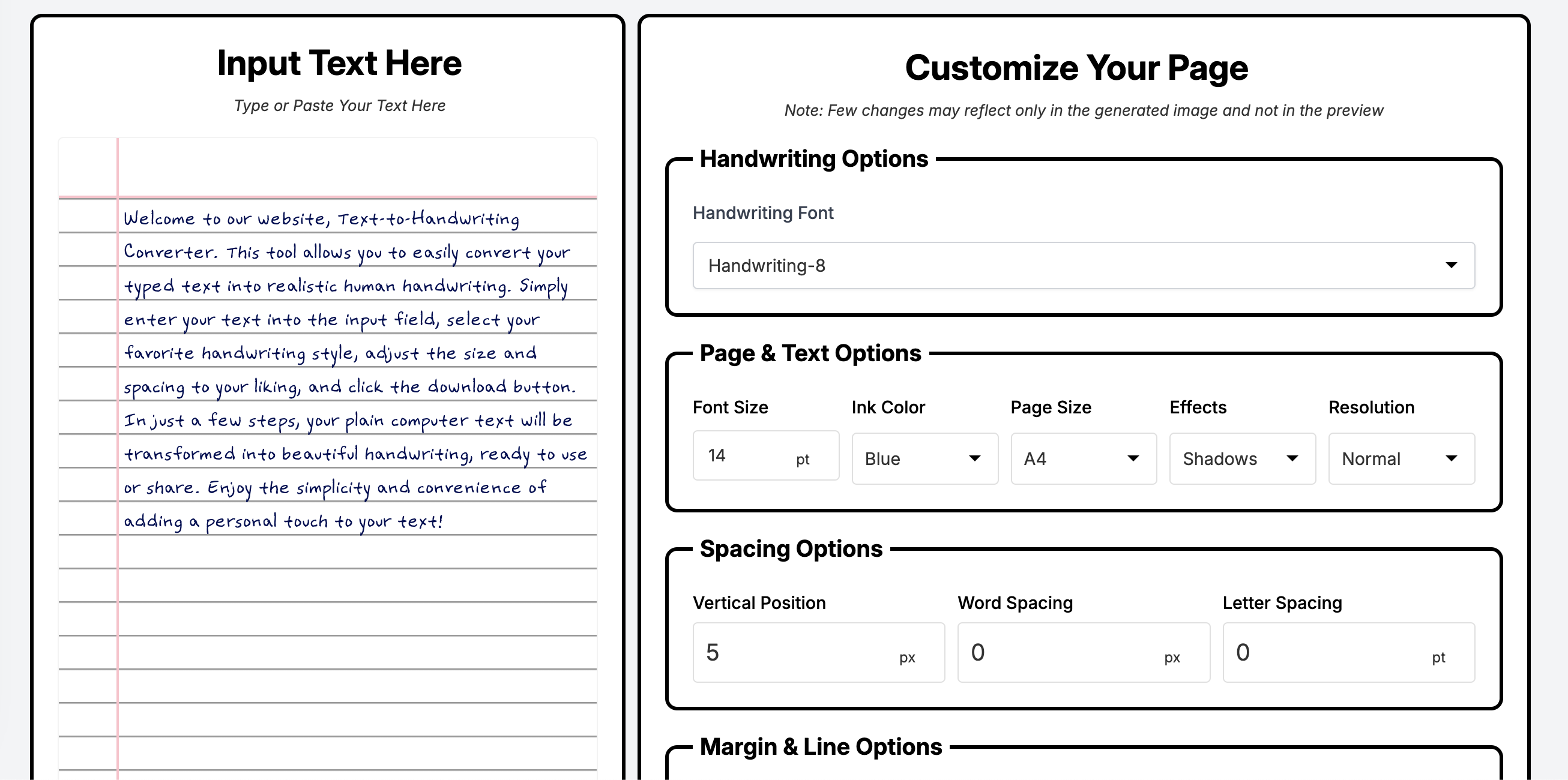
A text to handwriting converter AI is more than a simple font swap. The strongest tools also improve page structure, keep handwriting lines readable, and make exports consistent across multiple pages.
That matters because realism depends on layout as much as on the handwriting style itself. If spacing is off or lines break awkwardly, the page stops looking natural.
What AI handles better than basic generators
Basic tools can convert text, but AI-assisted tools are better at maintaining consistent visual output. They can support cleaner paragraph flow, smarter line wrapping, and more usable settings for margins, line height, and notebook backgrounds.
Key advantage: better structure means less cleanup after generating the handwritten page.
Who should use it
- Students preparing multi-page assignment submissions
- Teachers building worksheet material
- Users exporting printable journals or notes
- People who want to convert typed text to handwriting online quickly
How to choose the right settings
Use a handwriting font that stays readable at full page length. Avoid compressing too many lines onto one page. If the tool supports PNG and PDF export, test both so you can compare print sharpness and page fidelity.
Why this keyword matters
Users searching for this phrase usually want better output quality, not just conversion. They are looking for a tool that feels intelligent about page structure and gives them confidence that the result will look clean when downloaded.
Conclusion
If your goal is dependable handwritten-style output from a typed draft, a good AI-based converter will save time at both the writing and formatting stages.